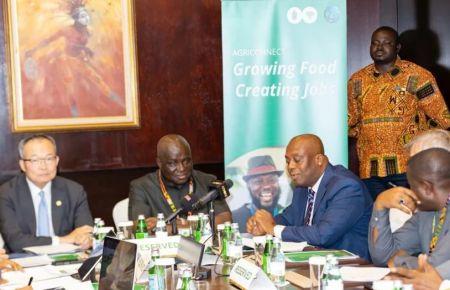
Ghana, in partnership with the World Bank, launched the
'AgriConnect Compact' program on June 3, 2026. This ambitious national framework aims
to strengthen food security, stimulate private investment, and accelerate the
development of agricultural value chains.
Estimated at $3.5 billion, this program seeks to coordinate
public and private interventions to improve agricultural productivity, develop
local processing, facilitate access to markets and financing, while strengthening
the resilience of the national food system.
The initiative focuses on strategic areas such as irrigation,
seed systems, agricultural mechanization, producer services, agro-processing,
and logistics infrastructure. It prioritizes key commodities like cocoa, palm oil,
rice, maize, and poultry, while also integrating high-potential sectors such as
cashew nuts, fisheries, and forestry.
Official projections indicate that the first phase of the
program, scheduled from 2026 to 2030, is expected to improve food security for
nearly three million people and create 2.6 million jobs across the country.
The pact's funding will come from the Ghanaian government,
technical and financial partners, and the private sector, whose mobilization
constitutes one of the project's pillars.
For Guangzhe Chen, Vice President of the World Bank Group
for the Planet, this initiative represents an important step in building a more
efficient and inclusive food system. According to him, the combination of public
reforms, investments, and coordinated implementation should strengthen food
security, support producers and agro-food enterprises, while attracting more
private capital to the sector.
The launch of AgriConnect Compact occurs in a context where
Ghana seeks to reduce its dependence on food imports and strengthen the resilience
of its economy. Despite the importance of its agricultural sector, the country
still imports a significant portion of its food needs due to insufficient local
production to meet growing demand.
The World Bank also notes that the deficiencies in rural
infrastructure, particularly the poor condition of roads and inadequate maintenance,
constitute a major barrier to the development of the sector. These constraints
limit producers' access to markets, increase logistics costs, and contribute to
significant post-harvest losses.


Comments 0
You must be a member to add a comment.
Already a member? Sign in
Not a member yet? Become a member for free
No comments on this article yet.