Les actualités de la BRVM en Flux RSS
Nous agrégeons les sources d’informations financières spécifiques Régionales et Internationales. Info Générale, Economique, Marchés Forex-Comodities- Actions-Obligataires-Taux, Vieille règlementaire etc.
Enjoy a simplified experience
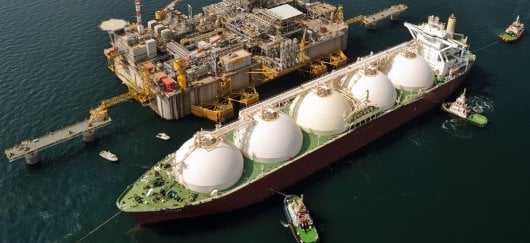
Find all the economic and financial information on our Orishas Direct application to download on Play StoreSpot prices for liquefied natural gas (LNG) in Asia increased for the third week in a row on Friday, now at their highest level in nine weeks. This increase is supported by the drop in temperatures in the northern hemisphere, which stimulated heating demand, as well as by a temporary drop in exports American at the beginning of the week.
According to industrial sources, the price The average amount of LNG delivered in March in North-East Asia was estimated at $11.60 per million British thermal units (MMBtu), compared to 11.35 dollars per MMBtu previous week. “Prices are under upward pressure both on the TTF and on the JKM,” explained Siamak Adibi, director of analysis at the supply of gas and LNG at the consulting firm FGE, in reference to European and Asian benchmarks.
The analyst points out that Europe is recording higher gas demand than a year ago. Although the expeditions of LNG remains robust, significant withdrawals from stocks are exerting a increasing pressure on the gas system. Added to this is the rise in prices. of the Henry Hub in the United States, which has an indirect impact on the spot market of LNG.
the United States, futures contracts on natural gas jumped 140% in the last seven sessions, a surge The Arctic cold caused the demand for heating to explode, freezing some oil and gas wells, and brought gas production to an all-time low level for two years. If American LNG supply normalizes gradually after disturbances, especially at Sabine Pass and Freeport, flows had not yet fully recovered their initial level at 29 January, according to FGE.
The extreme cold has also led to unusual movements within the global LNG fleet. According to Alex Froley, senior LNG analyst at ICIS, several cargoes were redirected to North America to meet heating demand. Au Minus three cargoes from Australia and Canada are also oriented towards Europe and the Americas, instead of their destination usual in Asia.
In Europe, S&P Global Energy evaluated the Northwest Europe LNG Marker (NWM) daily reference price for cargoes delivered in March at 12.505 dollars per MMBtu on January 29, or one discount of 0.94 dollars/MMBtu compared to the TTF hub. Argus set this price to $12,380 per MMBtu, while Spark Commodities valued the February price at 13,374 dollars/MMBtu.
According to ICIS, European prices should ease as the cold spell, considered to be short-lived, subsides. However, low storage levels at the end of winter will mean a sustained use of LNG cargoes throughout the summer to replenish the reserves. However, new volumes are expected to arrive on the market, especially with the expected start of the Golden Pass project in the coming years. months.
At the same time, the liquidation of positions Shorts on the TTF accelerated last week, driven by the surge winter prices. According to independent analyst Seb Kennedy, the number of ETF futures trading fell by around 5%, with holders of short positions who were forced to withdraw.
On the freight market, the rates
transatlantic flights fell further to 11,250 dollars per day, while the
Trans-Pacific tariffs have dropped to $30,500 per day, according to Spark
Commodities. American arbitration to North-East Asia via the cap of
Good Hope has also increased, as a result of the shrinkage
Continued difference between the JKM and TTF indices.
Vous devez être membre pour ajouter un commentaire.
Vous êtes déjà membre ?
Connectez-vous
Pas encore membre ?
Devenez membre gratuitement

22/07/2026 - Matières Premières

22/07/2026 - Matières Premières
20/07/2026 - Matières Premières
20/07/2026 - Matières Premières

20/07/2026 - Matières Premières
20/07/2026 - Matières Premières

20/07/2026 - Matières Premières

17/07/2026 - Matières Premières

17/07/2026 - Matières Premières
22/07/2026 - Matières Premières
22/07/2026 - Matières Premières
20/07/2026 - Matières Premières