Les actualités de la BRVM en Flux RSS
Nous agrégeons les sources d’informations financières spécifiques Régionales et Internationales. Info Générale, Economique, Marchés Forex-Comodities- Actions-Obligataires-Taux, Vieille règlementaire etc.
Enjoy a simplified experience
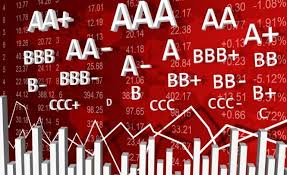
Find all the economic and financial information on our Orishas Direct application to download on Play StoreThe financial rating agency Fitch Ratings a
confirmed the issuer's long-term foreign currency default rating
(IDR) from Nigeria to “B”, with a stable outlook.
Fitch justifies the rating by a few factors. La
Nigeria's “B” rating is supported by the size of its economy, a
relatively developed and liquid domestic debt market, significant
oil and gas reserves, as well as a monetary policy framework and
improved change. However, it is penalized by the weakness of the indicators.
governance, a strong dependence on hydrocarbons, high inflation,
security problems and structurally very high non-oil revenues
weak, although improving.
The formalization of foreign exchange activity has improved
the functioning of this market, which has resulted in a greater
market liquidity and a relative stability of the naira.
Reforms and greater stability in the rate of
exchange rates have supported a trend of disinflation since April 2025, but
inflation remains well above that of peers, at 20% in August 2025.
With real policy rates becoming more positive,
the cbn a
cut the rate by 50 bps, to 27%, in September, the first drop since
November 2020.
Foreign exchange reserves reached 42 billion USD
at the end of September, and we expect a slight drop to 40 billion USD by the end of 2026,
or the equivalent of 5.8 months of current external payments, exceeding the
projected median “B” of 4.2 months.
Mso-bidi-language:ar-sa"> fitch ; mso-fareast-font-family:calibri; mso-fareast-theme-font:minor-latin; mso-bidi-font-family: “Times New Roman”; mso-bidi-theme-font:minor-bidi; mso-ansi-language:fr; Mso-fareast-language:en-us; Mso-bidi-language:ar-sa">Expects that the deficit The fiscal budget will increase in 2025-2026, reaching an average of 3.1% of GDP in due to higher expenses, driven by higher salaries, social and security expenses, debt service costs and expenses before the 2027 elections.
Vous devez être membre pour ajouter un commentaire.
Vous êtes déjà membre ?
Connectez-vous
Pas encore membre ?
Devenez membre gratuitement
24/06/2026 - Economie/Forex

22/06/2026 - Economie/Forex
22/06/2026 - Economie/Forex
22/06/2026 - Economie/Forex

19/06/2026 - Economie/Forex
17/06/2026 - Economie/Forex
17/06/2026 - Economie/Forex

17/06/2026 - Economie/Forex
17/06/2026 - Economie/Forex
24/06/2026 - Economie/Forex
22/06/2026 - Economie/Forex
22/06/2026 - Economie/Forex